Your cart is currently empty!
OOP Principles in Practice
$35.00
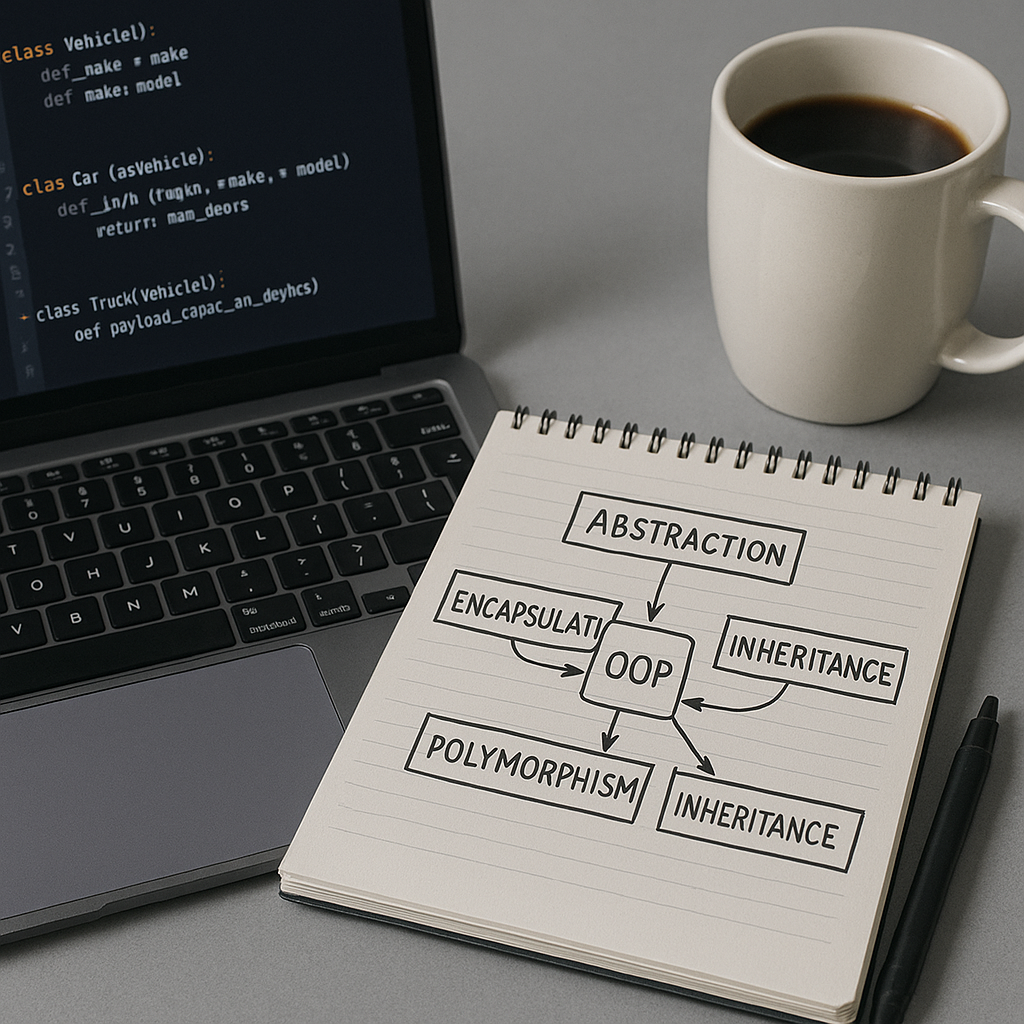
Understanding object-oriented thinking is the foundation of true programming mastery. This guide explains the core OOP principles not through dry theory, but through vivid examples, clear diagrams, and hands-on tasks that make you think like an engineer. You’ll learn to write code that doesn’t just work — it evolves and grows with your project.
From syntax to structure — learn to think in objects.
Full Description
This guide is designed for anyone who wants to finally understand not just how to write code, but how to design programs the right way.
Instead of dry definitions, it explains the principles of object-oriented programming through real-world analogies and step-by-step visual examples. You’ll see that any codebase can be imagined as a system of interacting objects — much like real life.
You’ll learn:
-
Abstraction: how to focus on what matters and filter out unnecessary details. Real examples show how to represent the world with classes and methods without overcomplicating the structure.
-
Encapsulation: why “hiding” internal details makes code reliable, safe, and easier to maintain.
-
Inheritance: how to build logical hierarchies between classes and reuse logic effectively.
-
Polymorphism: how to write flexible, universal code that adapts to different data types and behaviors.
Through examples in Python, JavaScript, and Java, you’ll create a small real-world project (for instance, a simple game or an order system) and visualize every connection with UML diagrams.
By the end, you’ll stop writing random code — you’ll start building organized, scalable systems.
Format: interactive PDF + practical examples + project template + exercises and quizzes.